
CONTENTS
OVERVIEW
Biomedical engineering is an interdisciplinary field dedicated to addressing biological and medical challenges for the benefit of humanity by applying engineering principles and techniques. The Biomedical Engineering (BME) programme is offered by the Faculty of Engineering via deep collaboration with Faculty of Medicine.
Students in the BME program receive training at the intersection of cutting-edge engineering and medical disciplines through core courses, while also having the flexibility to select from a diverse range of electives tailored to their specific career goals.
The field of BME is instrumental in creating innovative medical technologies, including MRI machines, brain-computer interfaces, cardiac pacemakers, orthopedic implants, rehabilitative devices, medical robotics, and minimally-invasive endoscopes. Biomedical devices are now being designed at micro- and nano-scales for diagnostic and therapeutic applications at the molecular and cellular levels. Students have the opportunity to engage with the extensive biomedical engineering research activities conducted within the University, thereby broadening their expertise in this dynamic field.
Focus areas of the programme are:
(1) Medical Instrumentation and Biosensors;
(2) Biomedical Imaging, Informatics and Modeling;
(3) Molecular, Cell and Tissue Engineering.
Graduates of the Biomedical Engineering (BME) program find diverse opportunities in various sectors, including hospitals, universities, government agencies, public organizations, and industries. The careers available to BME graduates span the entire value chain, encompassing research and development, manufacturing, quality assurance, consulting, distribution and sales, clinical engineering, regulatory affairs, and technology entrepreneurship. In addition to these career paths, BME graduates are well-prepared for pursuing advanced studies in engineering and biomedical sciences. Some alumni have even embarked on careers in business, law, and medicine, demonstrating the versatility and adaptability of their BME education.
To know more about CUHK BME Undergraduate Programme
Programme Brochure (Coming soon)
WHY CUHK BME?
Unique Learning Experience in CUHK BME:
ADMISSION
Admission Requirement
-
JUPAS Admission (JUPAS code: JS4460)
Students are expected to have completed at least two elective subjects plus the four core subjects. Priority scores are computed based on the Best 5 HKDSE subject results with subject weighting as below:
Admission Requirements for JUPAS Applicants 4 Core Subjects Minimum level Subject weighting Chinese Language 3 1 English Language 3 1.5 Mathematics (Compulsory Part) 3 1.5* Citizenship and Social Development A (Attained) - 2 Elective Subjects Minimum level Subject weighting One of the following:
- Mathematics (Module 1)/ Mathematics (Module 2)
- Biology
- Chemistry
- Physics
3 1.5* Other Elective 3 1 * Subject weighting of 1.5 is given to the best Mathematics subject (either the core Mathematics or the M1/M2 Extended Module)
*** Useful information for JUPAS applicants ***- Important information for JUPAS applicants: http://admission.cuhk.edu.hk/jupas/download.html
-
Score Calculator and Expected Score (for JUPAS Applicants): https://www.youtube.com/watch?v=3zlfNGXdwAg (Cantonese Version)
https://www.youtube.com/watch?v=s-WcDL8JizQ (English Version)
-
Non-JUPAS (Local Year 1) & International Student Admission
Local and non-local students with other qualifications can also apply through the non-JUPAS admission scheme. These qualifications include GCE, GCE-AL, IB, SAT/AP and other overseas qualifications for university admission. Preferences are given to applicants with good grades in at least two of the following subjects - Physics, Chemistry, Biology, or Mathematics.
Applicants who meet specific requirements as stipulated by the University for particular qualifications (including GCE-AL / International-AL, IB, Cambridge Pre-U, HKALE, associate degree / higher diploma) may apply for “Admission with Advanced Standing”. The minimum number of units for graduation for students admitted with Advanced Standing may be reduced by up to 24 units (normative period of study may be reduced by up to one year).
More information is available at:
Non-JUPAS (Local Year 1) Admissions
International Students Admissions Scheme -
Senior-Year Admission for Sub-degree Holders
- Local students who completed a local course of study leading to the qualification of an Associate Degree / a Higher Diploma, and
- Attained an acceptable level of proficiency in English and Chinese languages.#
-
Mainland Gao Kao Admission
Students from Mainland China who are current Gaokao candidates must apply through the National Colleges and Universities Enrolment System.
More information is available at: Recruitment section for Mainland China Students
CURRICULUM
Curriculum structure

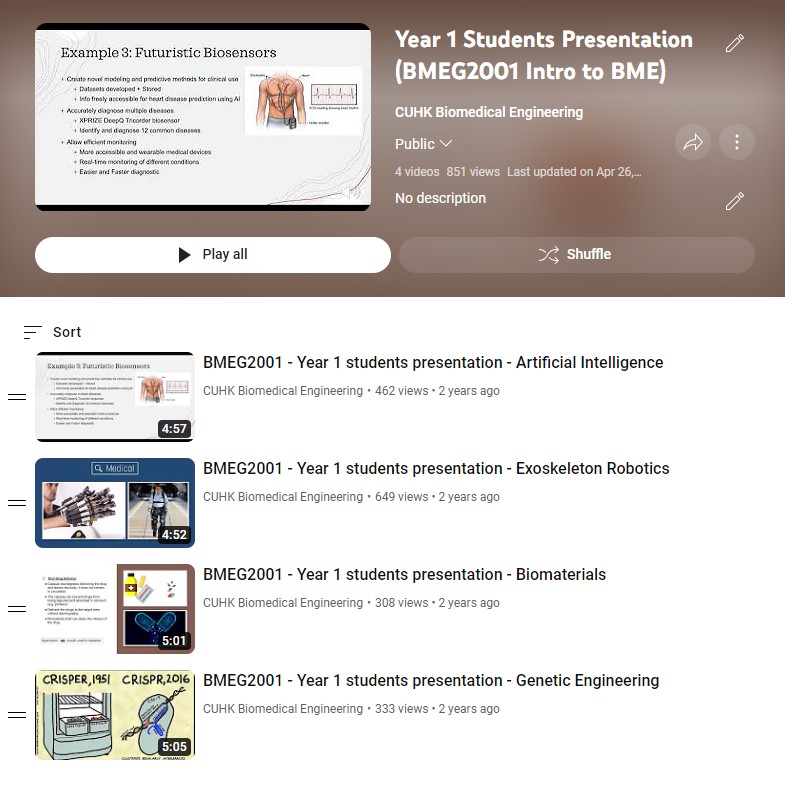
Presentations of year 1 students in a required course - BMEG2001 Introduction to Biomedical Engineering
STUDY SCHEME
| Year 2025-2026 |
Applicable to students admitted in 2025-26 Download link |
| Year 2024-2025 | Applicable to students admitted in 2024-25 Download link |
| Year 2023-2024 | Applicable to students admitted in 2023-24 Download link |
PRACTICAL TRAINING
Students are required to participate in a four-week professional and practical summer training on CUHK main campus and at Prince of Wales Hospital (PWH) and CUHK Medical Centre (CUMC). The in-house training involves electronic circuit design, simulation, fabrication, interfacing with software, data acquisition, and wireless communication, while the hospital training, students can experience the daily operation information flow and logistics in the running of a hospital. They will also learn about the fundamentals and the clinical use of medical instruments. The training provides a valuable chance for students to relate theory and engineering knowledge to practice in a real-world setting.
Students’ Sharing
Aiana BAEKOVA (Class of 2022)
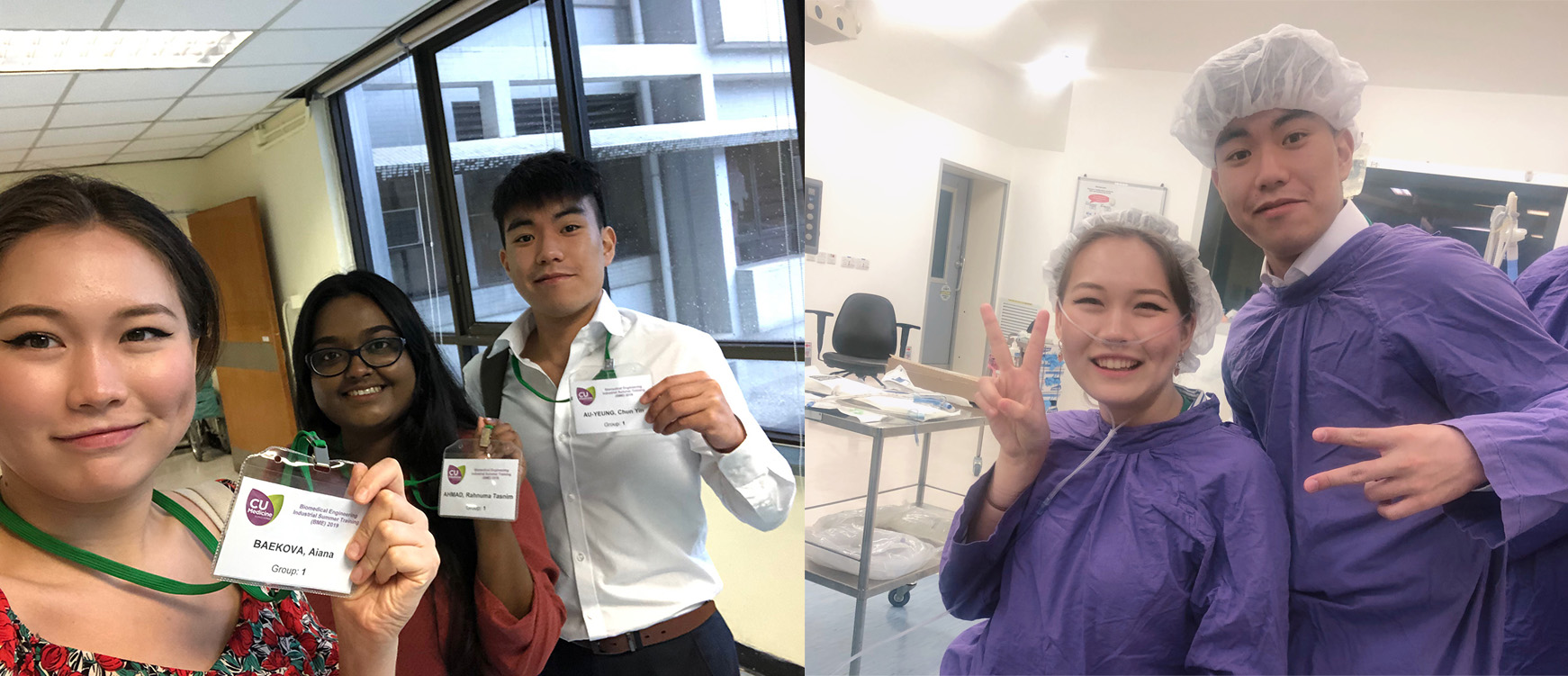
“Choosing a major is one of the most important decisions people make in their lives. It has to be something they will not regret spending 4 years on. I believe I made the right choice by joining BME!
In BME, not only we acquire knowledge from various subjects but also we learn how to apply those skills. During my first year, BME conducted summer training for all undergraduate students. The training helped me to see real-life applications of the concepts learned in class, and gave me an insight view on the working environment of biomedical engineers. All the hospital visits, medical instrumentation company visit and the laboratories motivate aspiring engineers, like me, to keep working and make a contribution later in their lives.
As an international student, I had some difficulty finding local friends but BME summer training changed that. BME Summer Training is what brought both local and non-local students together by dividing us into groups. Despite the short time we spent together as a group, we were still able to make vivid memories together! I am very grateful to the department for this opportunity!
Explore, innovate and care together with BME!”
EXPERIENCE AND OPPORTUNITIES
-
Overseas Summer Research Exchange
- Chang Gung University, Taiwan
- French National Centre for Scientific Research (CNRS), Troyes, France
- McGill University, Canada
- Mohamed bin Zayed University of Artificial Intelligence, UAE
- Monash University, Australia
- Nantes Université, France
- Nanyang Technological University, Singapore
- National Taiwan University, Taiwan
- National Tsing Hua University, Taiwan
- New Jersey Institute of Technology, United States of America
- New Zealand College of Chiropractic, New Zealand
- Singapore Eye Research Institute, Singapore
- Stanford University, USA
- Technika University of Gdańsk, Poland
- Technische Universität Dresden (TU Dresden), Germany
- Tsinghua University, Beijing, China
- University of Limoges, XLIM Research Institute (CNRS), France
- University of Pennsylvania, USA
- University of Sydney, Australia
- University of Washington, USA
-
Overseas Exchange
University provides overseas exchange opportunities to students to immerse in multi-cultural settings and to enrich their study life and personal experience. Many undergraduate students in Biomedical Engineering participate in overseas exchange programmes around the world.
Recent examples include:
- Aston University, UK
- Dartmouth College, USA
- Ecole Polytechnique Federale De Lausanne, Switzerland
- Eidgenossische Technische Hochschule Zurich, Switzerland
- Fudan University, China
- Graz University of Technology, Austria
- KTH Royal Institute of Technology, Sweden
- Lille Catholic University, France
- Melbourne University, Australia
- Nanyang Technological University, Singapore
- National University of Singapore, Singapore
- Peking University, Beijing, China
- Queen's University, Canada
- Ritsumeikan Asia Pacific University, Japan
- Shanghai Jiao Tong University
- Simon Fraser University, Canada
- Singapore University of Technology and Design, Singapore
- Tampere University, Finland
- The University of Queensland, Australia
- The University of Sydney, Australia
- University College London, UK
- University of Calgary, Canada
- University of Glasgow, UK
- University of Liverpool, UK
- University of North Carolina at Chapel Hill, US
- University of Pennsylvania, USA
-
On-Campus Research Internships
Many BME students participate in research internships in our laboratories in the summer as well during regular terms.
Students’ Sharing
SAELOR Jirapong (Class of 2025)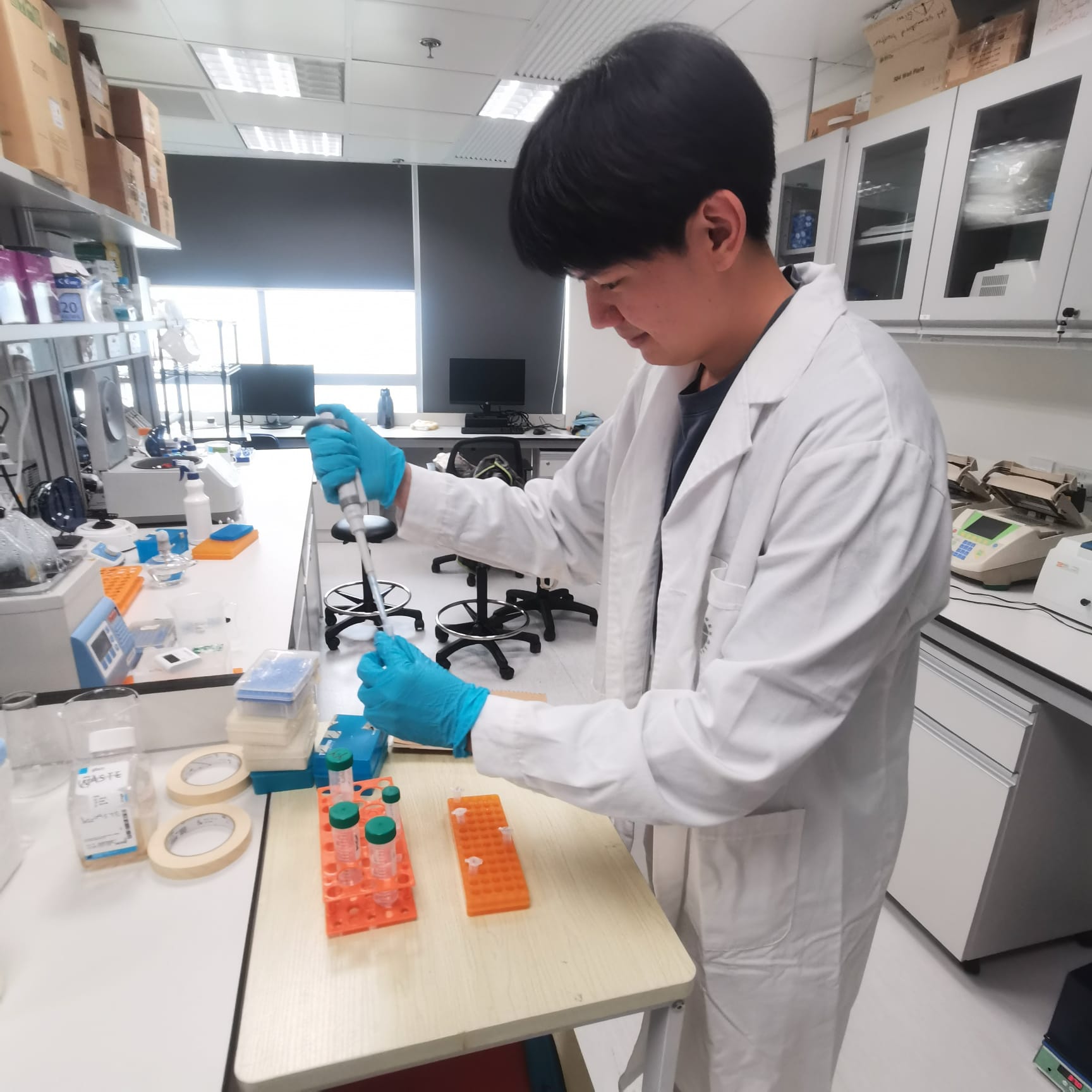
“I would like to express my gratitude to my internship supervisor, Professor DUAN Liting and PhD student Zhihao ZHAO for their guidance, support, and valuable insights throughout this project. I have learned a lot and understand more about tissue engineering and optogenetic research from this project. Moreover, I learn how researchers and postgraduate students conduct their research the process before they can publish their paper. I would also like to thank the Biomedical Engineering department for this research student helper opportunity. This opportunity is valuable for me such that it acts as a milestone for me to decide the stream I want to concentrate on and inspire me to pursue a postgraduate degree.”
Francis CHAN (Class of 2022)
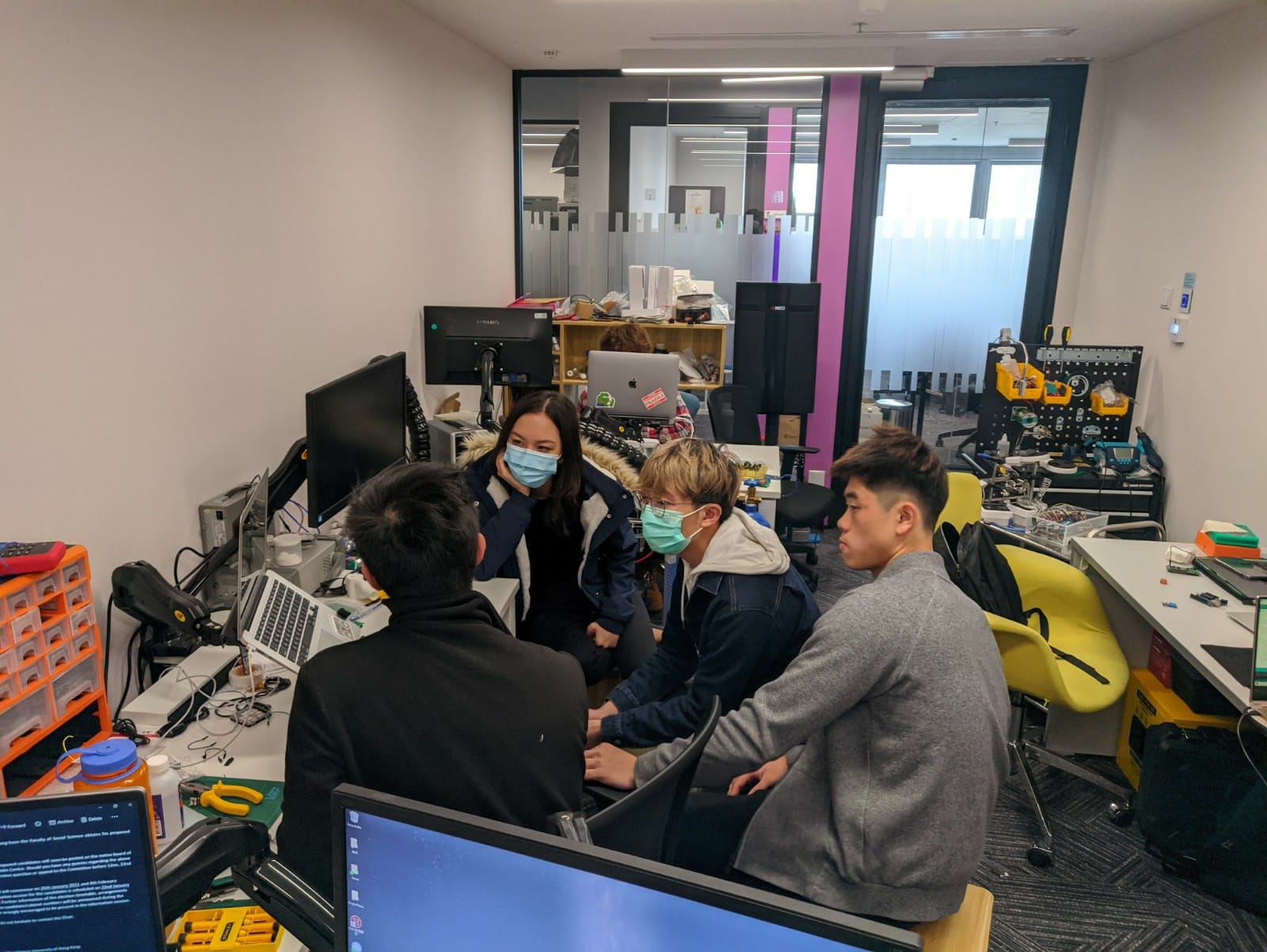
“The undergraduate research I joined on the first half year of 2021 earn me a wonderful experience in exploring the area of software development and data analysis. These elements allow me to recognize the applicable tools to be utilized in my future study.
Alson LEE (Class of 2022)
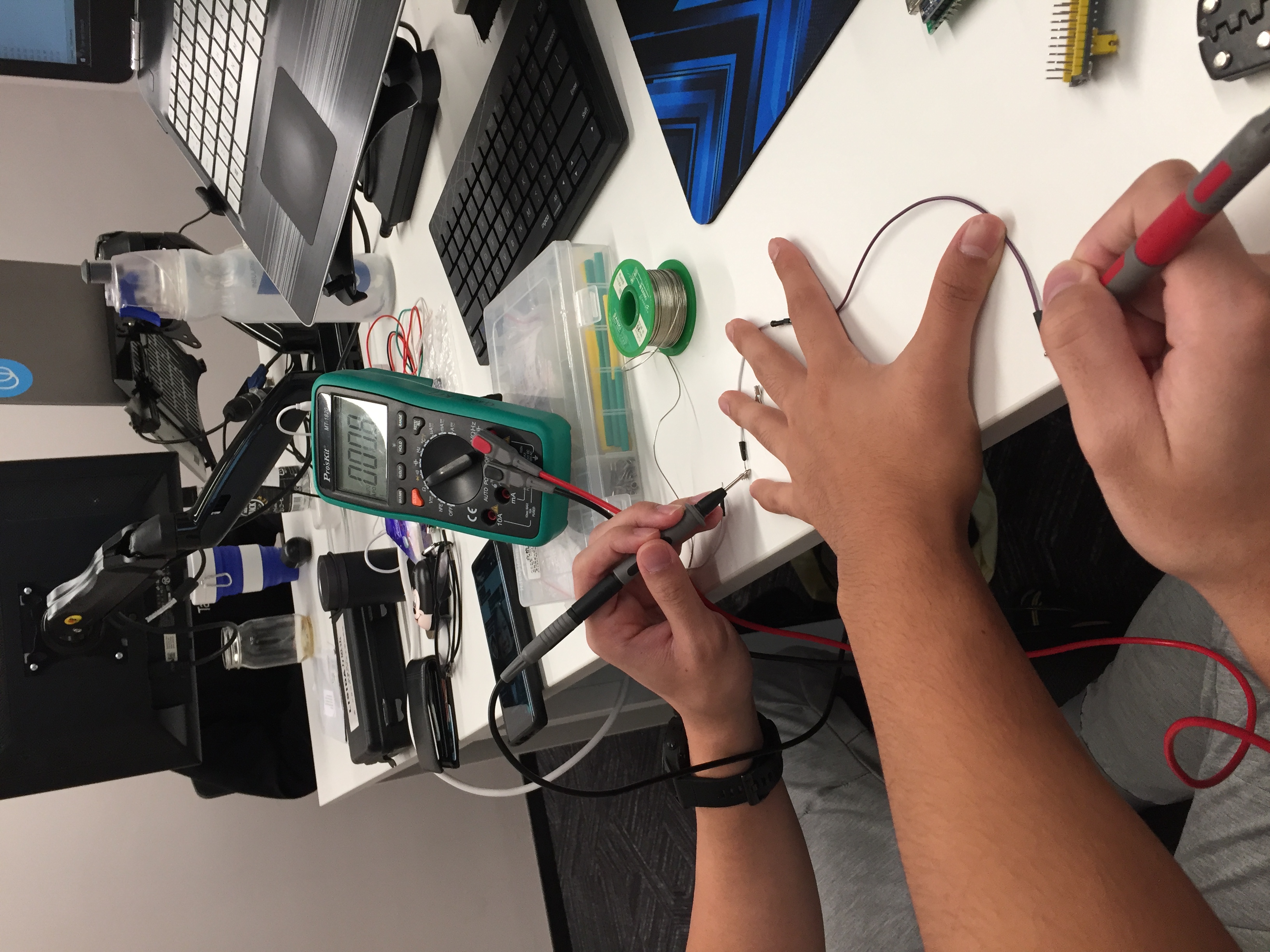
“The ongoing pandemic posed a rather difficult situation for the scope of the research experience. Even through all the challenges, I would say that my experience in this program has been great and that I wouldn’t have gotten so much time and experience on Arduino and hands-on engineering skills. I have certainly learned a lot!”
-
Work-Study Programme
Students can choose to participate in “Work-Study Programme” upon completion of the third year of their major study. The Programme provides students an opportunity to apply engineering principles and methods from their studies to an authentic working environment. Students will continue their final year of study on campus afterwards. Partners include Hospital Authority, private hospitals, companies from the biomedical engineering industries.
Recent examples include:
- Asia Satellite Telecommunications Company Limited
- ASM Technology Hong Kong Limited
- Automatic Manufacturing Limited
- Electrical and Mechanical Services Department, HKSAR Government
- Healthcare Technology International Limited, China
- Hong Kong Productivity Council
- ITE Smartcard Solutions Limited
- Leisure and Cultural Services Department, HKSAR Government
- Medihealth Limited, China
- Medisen Limited
- ON Semiconductor
- The Hong Kong and Shanghai Banking Corporation Limited (HSBC)
-
Design Competitions
- iGEM, International Genetically Engineered Machine Competition at Giant Jamboree in Boston, USA
- Engineering Medical Innovation Global Competition
- Hong Kong University Student Innovation and Entrepreneurship Competition
- ASM Technology Competition
Our department provides overseas summer research internship opportunities for our BME students. Internships usually start on around June and last for about 8-10 weeks in every summer. Our professors have close collaboration with some of the overseas institutions across USA, Canada, Poland, Australia, Japan, Taiwan and China.
Recent examples include:
CAREER PROSPECTS
Employment of biomedical engineers is expected to grow much faster than the average for all occupations. The aging population and the focus on health issues will increase the demand for better medical devices and equipment. The development of biomedical engineering is therefore a worldwide trend. Our graduates are pursuing the following career paths:
BME Graduate Career Pathways

FINANCIAL ASSISTANCE
Admission Scholarships
Ample scholarships are available through multiple sources – the Office of Admission and Financial Aids, Colleges, the Faculty of Engineering, as well as the Department of Biomedical Engineering to encourage students to participate in international competitions and conferences.
In the previous years, around 20% of our newly admitted students have received an Admission Scholarship (in one-off or renewable offer), the highest admission scholarship received is up to full tuition fee per academic year.
For more details, please go to:
Faculty of Engineering Admission Scholarships for New Students
Financing Your Studies
STUDENT STORIES
Fiona LAM (Class of 2026)
admitted via JUPAS
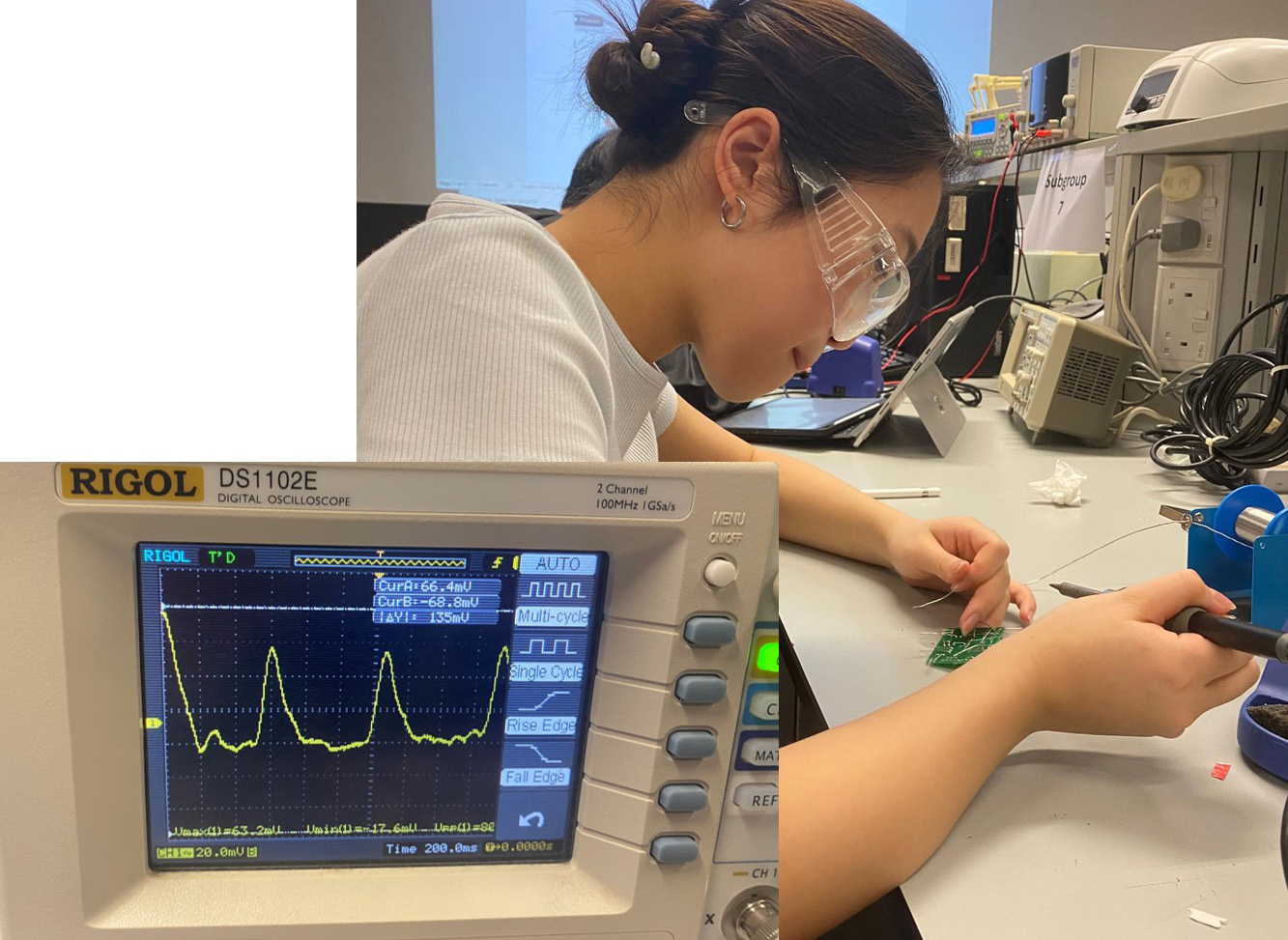
“When I first started university, I was lost and found it difficult to envision my university life. Our department's introduction course in the first semester helps a lot as we have the chance to learn about each professor's field of study. This tailor-made course for BME freshman allows me to explore what stream I would like to pursue and provides chances for interaction among students and professors. Another course that I found helpful in my first year is our summer practical training. We have the chance to visit different departments in hospital and see how BME is applied in real-life settings. Seeing how devices support hospital service and enhance patient's quality of life motived me to continue my study. Through this program, I am grateful to have made friends whom I can have fun and study with. I am glad to say I have a fantastic first year experience in BME and feel motivated towards the next few years of study.”
Thomas CHAN (Class of 2024)
admitted via JUPAS
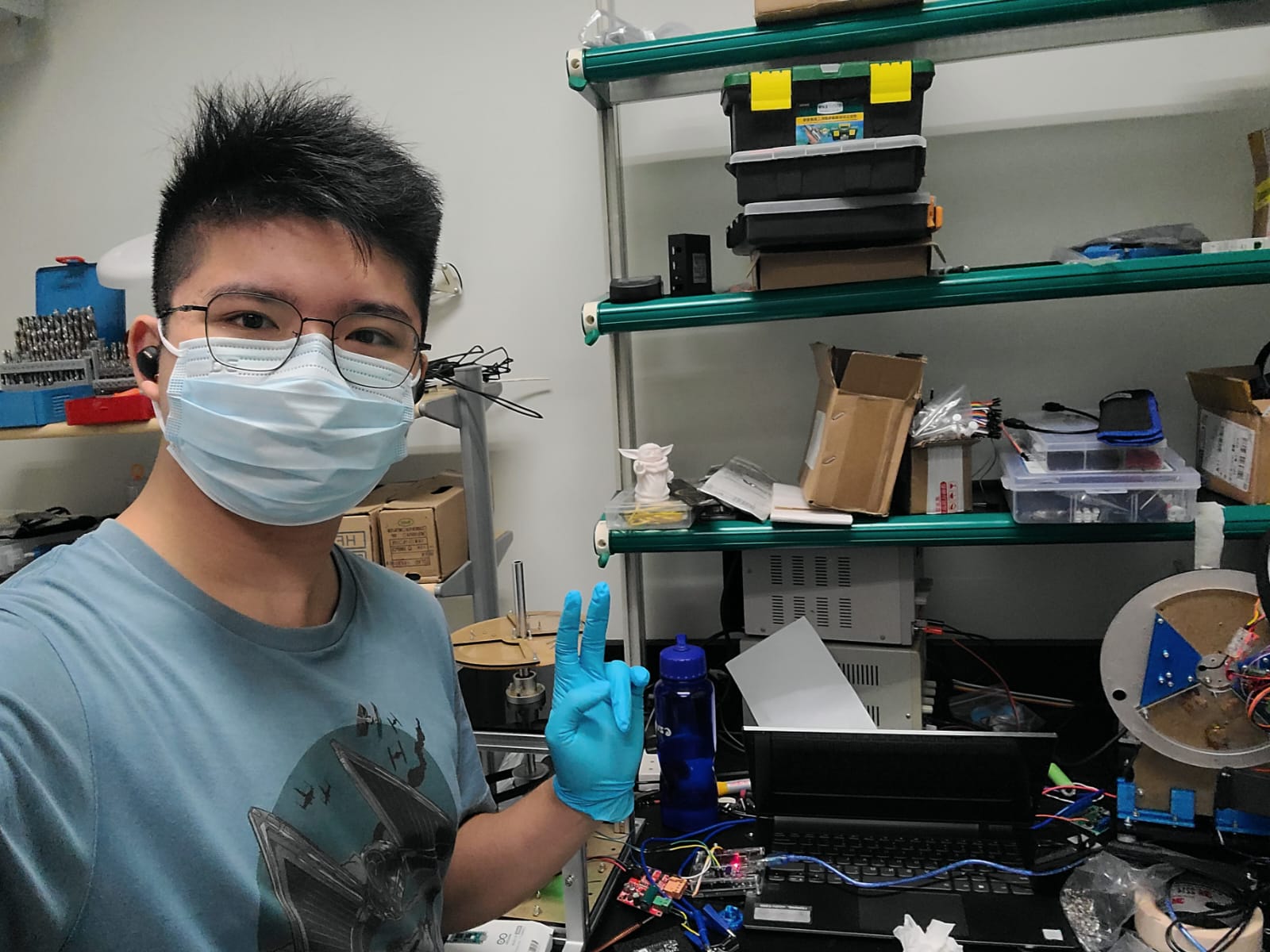
“I think studying in BME has provided me countless opportunities to try and explore different fields of knowledge like electronic, imaging and medical-related courses are all available. They also have many projects to give you hands-on experience, like building a robotic arm and ECG detector. This means you can find your future path by trying more different things, which is the reason why I chose BME. At this moment, I am having a BME summer internship at the University of Technology of Troyes in France, doing an optic-related biosensing experiment. This opens my eyes by showing me what doing real research feels like. Even though this is a challenging path to take, I think in the end, it will be worth it, especially if you want to do research in the future.”
CHEUNG Suen (Class of 2023)
admitted via JUPAS
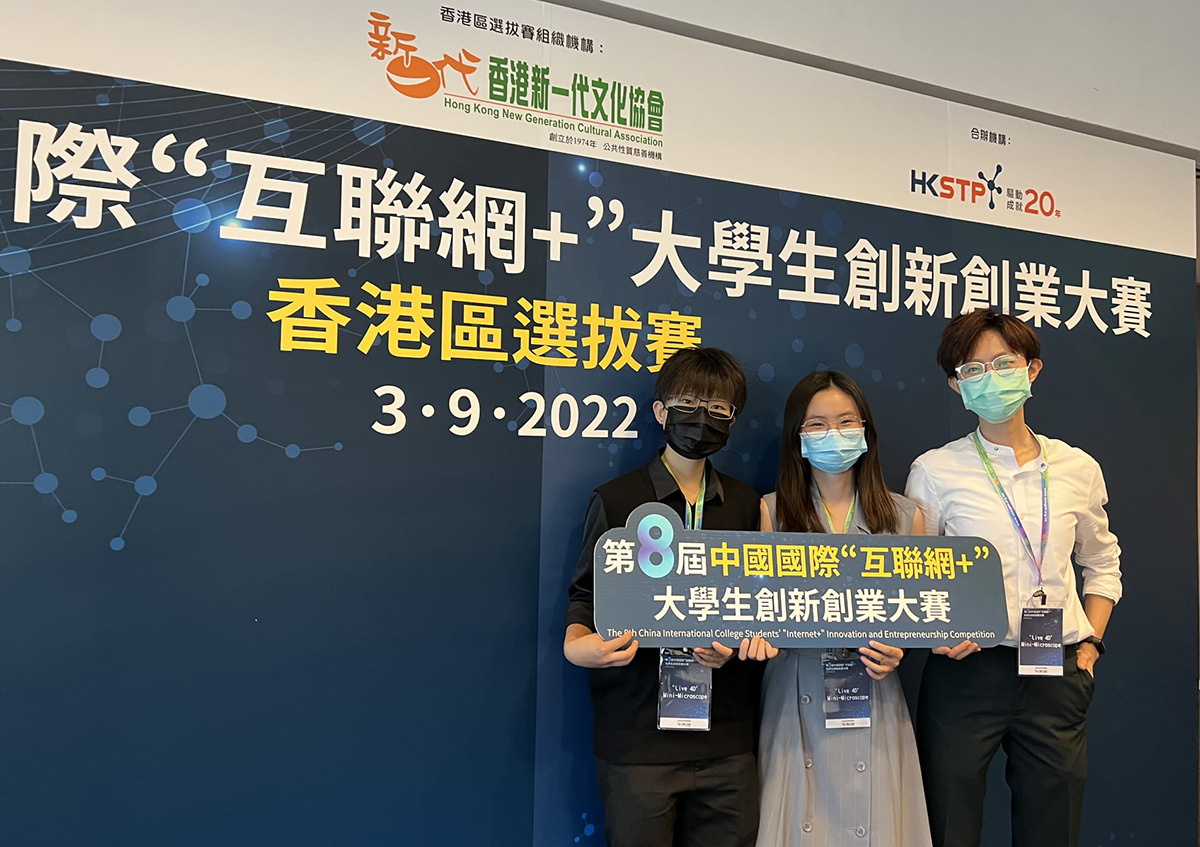
“BME is an interdisciplinary program that can be struggled during the beginning of the study, as we have to learn a variety of subjects such as physics, biology, chemistry, mathematics, and programming. However, this broad curriculum trains your time management and problem-solving skills while also helping students identify their strengths and interests. BME offers a range of hands-on courses that we can engage in projects and experiments and encourages innovation, allowing students to design their own medical products.”
Diya MISHRA (Class of 2024)
admitted via non-JUPAS International
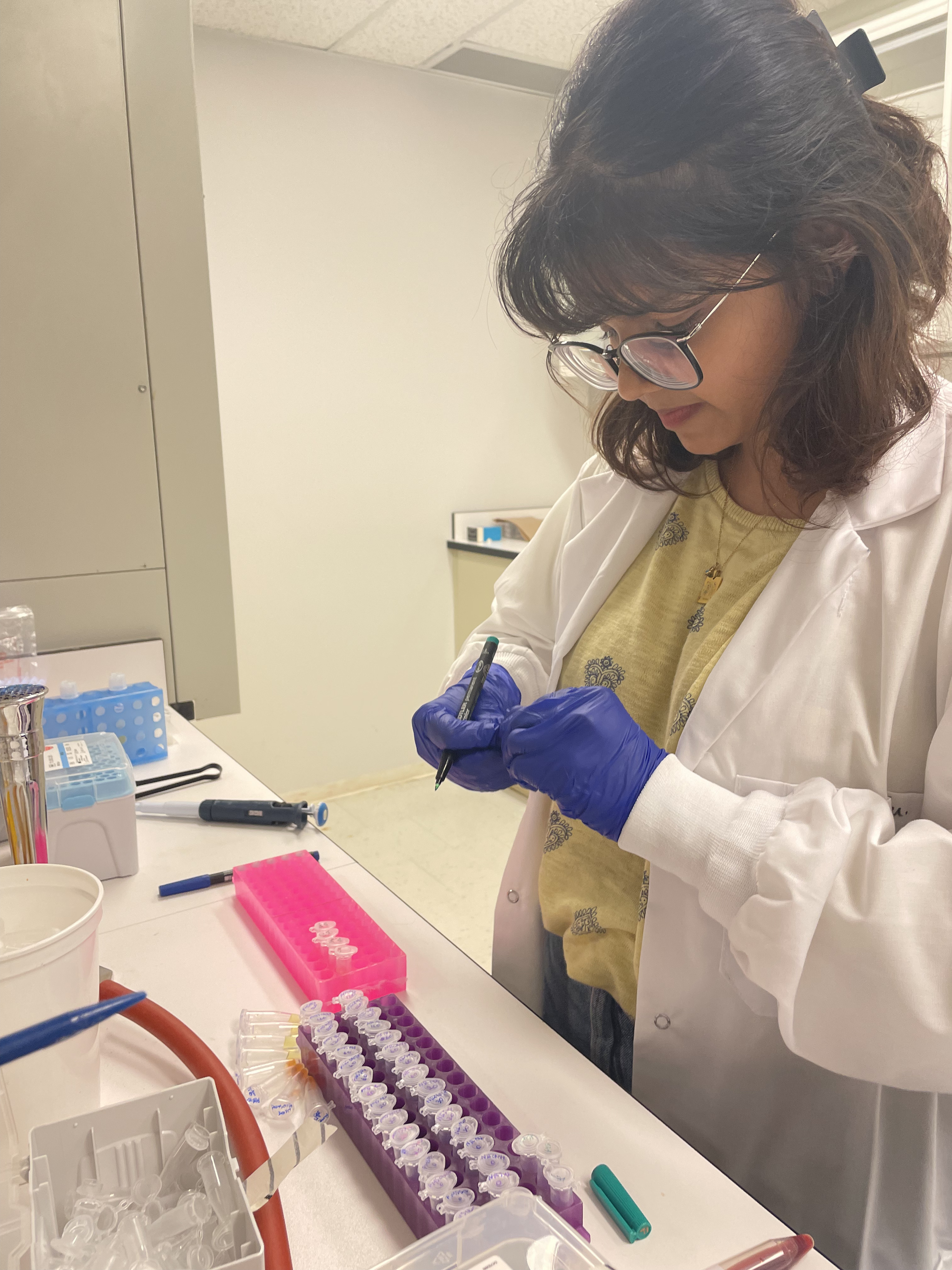
“CUHK’s multidisciplinary BME program is centered on an all-rounded development for their students. The initial years allow students to build up a strong fundamental understanding of the entire field, allowing students to explore and figure out their personal interests. In the last few years, through the opportunity of specializing in one of three available streams, students can focus more on their interests. One of my main takeaways as an engineering student is the significance of practical experience. Projects, internships, and other various opportunities are what have allowed me to uncover where my interests lie. What has impressed me the most is the department’s commitment to assisting students get that pivotal experience for the development of our critical skills as an engineer. The department closely works with professors and students to provide various stages of training for us, including but not limited to on-campus lab assisting opportunities, overseas summer internships, or even a workstudy program.”
FAQ

Admission
- How many students we are admitting each year?
- What qualities of the applicants do we look for?
- What is the JUPAS code for this programme?
- How is the admission priority score computed for JUPAS applications?
- Do I need Biology to apply to this programme?
- Any Admission Statistics of JUPAS Applicants of BME programme?
- How to apply for admission to BME?
General Questions
- What is the difference between BME and related programmes (Bioengineering, Biomedical Sciences)?
- How to arrange a School Talk?
How many students we are admitting each year?
Around 50.
What qualities of the applicants do we look for?
We look for students who like science subjects, love to EXPLORE, INNOVATE and CARE, passionate for learning in breadth as well as in depth, ready to acquire new knowledge across disciplines, and eager to apply their learning to solve real-life problems in the medical and healthcare industries.
What is the JUPAS code for this programme?
JUPAS Catalogue No.(聯招編號): JS4460
BEng in Biomedical Engineering 生物醫學工程學
For details, please click this Link
How is the admission priority score computed for JUPAS applications?
Students are expected to have completed at least two elective subjects plus the four core subjects. One of the electives should be Physics, Chemistry, Biology or Mathematics Extended Module M1/M2. Priority scores are computed based on the Best 5. A higher weighting of 1.5 will be given to English, Physics, Chemistry, Biology and one of the Mathematics subjects (either the core Mathematics or the M1/ M2 Extended Module).
Do I need Biology to apply to this programme?
All science subjects are equally weighted with a factor of 1.5. Some students in our programme missed some science subjects (including Biology) in their secondary school and can still do well in our programme. Our flexible articulation allows our students to take some remedial subjects for better underpinning if needed.
Any Admission Statistics of JUPAS Applicants of BME programme?
| Admission Grades of JUPAS Applicants (2025 Entry) | 2026 Expected Score | ||
|---|---|---|---|
| Target Percentile | Programme Weighted Total | Selection Principle | |
| Upper Quartile | 44.50 | Best 5 subjects | 40.0 - 41.0 |
| Median | 42.25 | ||
| Lower Quartile | 41.25 | ||
| Score Conversion for Category A: Core and Elective Subjects (including M1 or M2) | |||||||
|---|---|---|---|---|---|---|---|
| Level | 5** | 5* | 5 | 4 | 3 | 2 | 1 |
| Score | 8.5 | 7 | 5.5 | 4 | 3 | 2 | 1 |
| Score Conversion for Category C: Other Language Subjects | ||||
|---|---|---|---|---|
| French / German / Spanish | C2 | C1 | B2 | B1 / A2 |
| Japanese | N1 | N2 | N3 | - |
| Korean | Grade 6 | Grade 5 | Grade 4 | Grade 3 |
| Urdu | A++ / A+ / A | B++ / B+ / B | C | D / E |
| Score | 7 | 5.5 | 4 | 3 |
The Expected Score shown is for reference only and should not be used to predict the chance of admission in any given years.
How to apply for admission to BME?
CUHK OAFA Website:
http://admission.cuhk.edu.hk/
What is the difference between BME and related programmes (Bioengineering, Biomedical Sciences)?
Similar in name to Biomedical Engineering is Biomedical Sciences. However, the scope of studies is entirely different. Biomedical Sciences focuses on understanding the underlying mechanism of biological processes. For example, Biomedical Sciences can help to understand how a virus enters the body of humans while it is often the Biomedical Engineer who uses this knowledge to engineer vaccination or virus-test technologies for the benefit of the public.
How to arrange a School Talk?
Email: bmeinfo@cuhk.edu.hk
Phone Number: +852 3943-1613